Google/Yahoo Email Regulations: Prepare DKIM, SPF, and DMARC Compliance
May 2, 2025
Phase 2 enforcement shows Google rejecting 20% of non-compliant emails; check DNS zones for DKIM, SPF, and DMARC.

Phase 2 enforcement shows Google rejecting 20% of non-compliant emails; check DNS zones for DKIM, SPF, and DMARC.
Re: Google/Yahoo Regulations. Earlier this week, we transitioned into Phase 2, which will continue until June 1st.
Everyone was warned that "there will be problems" if a DKIM/SPF/DMARC setup isn't implemented.
Interestingly, no issues arose for those who omitted this step in February and March.
However, starting April 1, Google began rejecting 20% of non-compliant email traffic, noting in their documentation that the "rejection will be gradual".
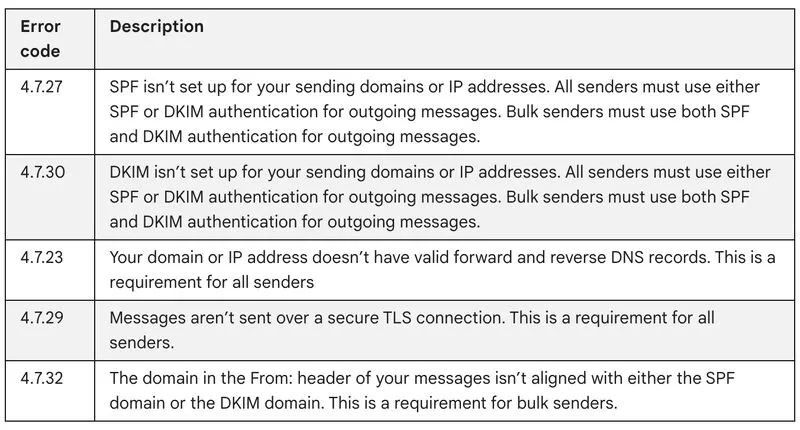
Consequently, anyone who sends marketing newsletters & drip campaigns without the necessary email server implementations will start receiving bounce notification reports. These reports will include error codes indicating the reasons for rejection.
Phase 3 will commence in June, when 80% of non-compliant email traffic will be rejected.
A heads-up for everyone to check their DNS zones to ensure the DKIM and SPF protocols are correctly configured for each system sending emails from your domains, provided the DMARC is enforced under a strict compliance framework.
Failure to comply will likely result in your emails being rejected and not delivered.