Hidden SPF Abuse via Look-Alike SendGrid Domain

April 2, 2025

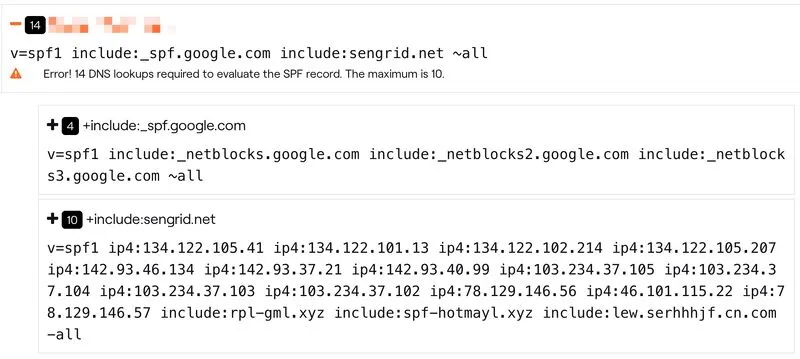
During an SPF audit, DNS lookup limits were exceeded despite only Google and SendGrid being expected. Investigation revealed a typo-squatted include domain masquerading as SendGrid, exposing a serious email security and supply-chain risk.

Hidden SPF Abuse via Look-Alike SendGrid Domain

While investigating the SPF record for a company, I was surprised to find that even with only Google and SendGrid servers, the SPF DNS lookups exceeded the maximum of 10. Upon further inspection, I discovered that the SPF record included IPs from suspicious servers hidden behind the "include" parameter. Initially, I assumed SendGrid's servers had been compromised.

However, a closer examination revealed that the parameter was not "include:sendgrid.net" but rather "include:sengrid.net". This subtle difference, a missing "D", raises significant concerns.

One of the questions is how such a major service provider like SendGrid doesn't own domains that closely resemble their primary one. This oversight can be exploited by malicious actors, leading to severe security implications. Isn't it a fundamental rule in cybersecurity to protect and secure look-alike domains to prevent such vulnerabilities?


Related posts
All posts
Backscatter Injection Attacks Exploiting Legitimate Infrastructure

Attackers use backscatter emails to bypass filters, harming servers and delivering phishing content.

Backscatter Injection Attacks Exploiting Legitimate Infrastructure
The Risks of Abruptly Enforcing DMARC p=reject in Organizations

Sudden DMARC enforcement can disrupt workflows, block emails, and impact organizational operations significantly.

The Risks of Abruptly Enforcing DMARC p=reject in Organizations
How a Fake Bank Transfer Email Nearly Fooled Me

Spoofed emails can mimic trusted senders, highlighting risks in elementary school communications.

How a Fake Bank Transfer Email Nearly Fooled Me